Author: JD Stewart

  • The Law of the Mind

    If the law of leadership, I wrote about a few weeks ago, were the only law that applied to bring your ideas and products to market then MITS should own the personal computer market. After all they were first to market with the very first person computer, the Altair 8800. But I doubt most you you have ever heard about them. Or if you are old enough to have heard about them. You probably have completely forgot about them. Does this mean the law of leadership does not work? No, the law of leadership continues to hold firm.

    While the law of leadership holds firm it can and is often modified by the law of the mind. The law of the mind simply says it is not enough to be first to market you must be first in the mind of your potential customers and clients This law is reaffirmed over and over again. Being first in the marketplace is only beneficial to the extend that it allows you to be first in the mind of your potential customers and clients. A personal example of this is the simple song that goes “If your happy and you know it clap your hands.” and then you clap twice. Well I learned that song in Sunday School when I was a child. The only difference is that I learned it “If you saved and you know it clap your hands” The first time I heard it with happy rather than saved I did not like it because it I thought it was a rip off of my Sunday School song. While my Sunday School song was not the original it was first in my mind and therefore better.

    Being first in the mind has tremendous impact in bring a product of service to market. In the 1980s MCI developed 1-800-Operator. At that time if you needed assistance getting connecting or placing a collect call you simply dial 0 for operator. MCI wanted part of that action. So they needed a way to put themselves first in the mind of the public. 1-800-operator was the solution. They spent a lot of money in advertising this service. They were able to make an impact in the market. But it cost a lot of money. Changing the mind of someone how has already made a decision or established a pattern, while not impossible, is difficult. Being first to market with a product or idea allows you to become first in the mind of potential customers and clients while expending comparatively little money. One a few dollars can work marketing miracles and the next day millions can not save a company.

    Getting the name right for your product of service is also vital. The early personal computer industry illustrates this very well. In the early days of the personal computer The major players were Apple II, Commodore Pet, IMSAI 8080, MITS Altair 8800, and Radio Shack TRS-80 Which one of those names is the simplest and easiest to remember? The

  • 5 Steps to Becoming a Better Leader

    I was driving home with my wife from visiting our 5 month old granddaughter. By the way, she is really cute. My cell phone rang and this pleasant voice on the other end called me by name and says who she is. Since I get a lot of calls from people and I do not know who they are, they may be clients or potential clients, I try to listen and interact enthusiastically. The lady’s name was Karen. As I said Karen called me by name. But, I did not recognize the voice. She could have gotten my name off my web site. Or it could be I knew her and simply had not recognized the voice yet. Karen then told me I was going to receive a free quote on some health insurance so I could compare costs. As politely as I could I informed Karen that I was not interested in switching insurance carriers and thanked her for her call. I really was not thankful for the call. I was just trying to be polite.

    As I mentioned the call came in while I was driving and as a result it went over blue tooth in my cars to my car speakers. That meant my wife, Patricia, heard both sides of the conversation. Now, my wife is not a sales person. She is very introverted and never likes being brought into the spot light. That’s a lesson I keep have to relearn. Her only involvement in sales is a purchaser. And as a purchaser she had some very interesting insight as to the sales process. After I hung up, she said, “I think sale peoples tactics are going to have to change.” I agree with her. Of course, I’ve found when I don’t, I am usually wrong. I mean that sincerely. Her insights are pretty accurate.

    Let’s look at what happened when Karen called.

    When Karen’s called she had my attention. I thought she might be a potential client or past client whom I did not recognize. However, Karen never gave me a reason to be interested in her or her product. She only said she was going to send me a price list so I could compare prices. She never established the fact I needed or even wanted her product. Consequently, I didn’t want it. The only thing she did was to allow me seeing myself taking time out of my busy day to accomplish a task that would only benefit her. Comparing prices!? That’s an activity which may or may not provide me any benefit. In fact, my belief that all reputable providers are going to be pretty close to the same price causes me to not believe I will receive any benefit at all. It’s only cost me.

    Persuading someone to do something you need to have done is real leadership. Every executive, manager and salesperson, mother or for that matter everyone has to answer the question, “How can I convince someone else to do something I need to have done.” Mothers have to convince little Johnny to clean up his room. Sales people are trying to convince a buyer to purchase their product. Managers try to convince employees to accomplish a task within a designated period of time. Employees try to convince their manager they need more resources. Everyone needs to persuade someone else about something.

    Fortunately there is a proven successful 5 step approach. It was developed in the 1930’s by Alan Monroe. Dr. Monroe was a professor at Purdue in the 1930s. Monroe created what is known as the Monroe Motivated Sequence. The sequence is a logical progression of steps to motivate someone to take action.

    These steps may seem a little trite to you. You’ve seen at work so many times in so many places. You’ve seen them used in everything from infomercials to presidential elections. Why? Because, they work. Here they are:

    1. Attention – You need to grab and hold the attention of your audience. Use a story, shocking example, dramatic statistic, and quotations, something that will capture the imagination.
    2. Need – Show that the problem is real. The problem is truly significant, and it is not going to go away by itself. Use statistics and examples. In this step, you’re convincing your audience that there’s a need to take action.
    3. Satisfy – Now you need to provide a solution to the problem you have just outlined. Be specific and give solutions that can implement. And once implement, the problem will either be solved or improved.
    4. Visualization – Tell the audience what will happen if the solution is implemented. Draw word pictures let them actually see in their mind the result.
    5. Action – Tell the audience what specific action they can take personally. No this is not obvious. Without this step the conclusion your audience will draw will be, “Yeah, that’s a great idea. Somebody should do that.” You want them to be that somebody, so tell them what they can do.The next time you need to give a presentation, write an article or make a sales call or convince little Johnny to clean his room. Think about what you are going to say. Think about the other person. How do they understand their needs? How does your proposal or product satisfy that need? If they see how they benefit they will be a willing participant in you proposition.

    Learn the steps in the Monroe Motivate Sequence and put them into action. If you do you will be a better persuader which means you will be a better leader.

  • Remember a Long List of Items

    Having a good memory is an important skill in business. Notice I referred to memory as a skill not simply as an ability. Being able to recall lists of items quickly, accurately and reliably improves both your productivity and creativity. Often we are left with the impression that some people are simply blessed have a good memory and while others or not. For example, my wife has a great memory. And I always had difficulty remembering things, anything. The problem was, I had never been taught how to remember. I had never been shown how to develop the memory skill. When I asked Patricia, my wife, how she was able to remember so many items, she told me. She said she simply has a picture in her head. The process she used was completely foreign to me. I simply assumed that you either had it or you did not. I really did not understand what she was saying. But having done a lot of research on the mind and memory, I now have a better understanding of how to remember details. Today, I demonstrate my mental skills in my mentalism show by learning a list of 20 random items is a few seconds. I memorize a current popular magazine. Then have someone randomly turns to a page and I can tell them what is on that page. The average person today can only remember a list of 3 to 4 items. And that is actually down from 7 items only 40 years.

    How do I do it? How do I memorize so much in such a short period of time? Well it has been through years of rigorous training and sacrifice, through deep mediation and careful study, I have been able to develop my mental powers to into something only few can achieve. Ok, that is not true. I use a technique that only takes a few minutes to learn. And as with any skill, the more you practice the better you become.

    Here is how I do it. I use what are called memory pegs and memory associations. I first memorize a list of words. This list never changes. Then I make an association between the items I am trying to remember with an items in the list I have already learned. There are several peg lists you can use. I use different lists based on the type of things I am trying to remember.

    Yesterday, I was out and stopped by the grocery store. As I pulled into the parking lot, I called my wife to ask her if there was anything she would like me to pick up. She raddled of several items. I did not have a pen to write them down plus I was looking for a parking place at the time. So here is real life example on how the process works.

    Here is a peg list I am sure you already know.

    1. Thumb
    2. Shoe
    3. Knee
    4. Door
    5. Hive
    6. Sticks
    7. Heaven
    8. Gate
    9. Spine
    10. Hen

    In case you do not recognize it, this list is from the children’s song “This Old Man” It goes: “This old man he played one. He played nick knack on my thumb. With a nick knack paddy whack throw the dog a bone. This old man came rolling home.” and so on. The list is easy to remember because all the items rhythm with the number they are associated with. So let’s give the process a try.

    Here is a grocery list or 10 random items

    1. Milk
    2. Potato Chips
    3. Bread
    4. Lunch Meat
    5. Eggs
    6. Bell Peppers
    7. Onion
    8. Ketchup
    9. Cheese
    10. Nuts

    Now associate each item in the grocery list with the corresponding item in the list from the song “This Old Man” The grocery list # 1 item is milk and the #1 item in the “This Old Man” list is thumb. You could imagine yourself making a fist with your thumb sticking straight up in the air then as you squeeze your fist milk spurts out your thumb. And adding detail to the mental imagine makes it more memorable. So instead of just milk this is 1% white milk as opposed to 2% or chocolate. Now think about little 1 shaped capsules filled with white milk popping out of your thumb as you squeeze your fist. Boop! Boop! Boop! The more ridiculous the image the easier it is to remember. What that means is remembering details about an item should now be easier. Now, instead if milk coming out of your thumb when you squeezed your fist, you could imagine a baby sucking on a thumb and milk coming out of the thumb as the baby sucked. But that almost makes sense. Well, in my world it makes sense. Anyway generally the more ridiculous the image is, the easier it is to remember. But you can obviously customize this to your own personality.

    Let’s do one more together. The second item on the grocery list is Potato Chips. The #2 item in the “This Old Man” song is shoe. You can imagine wearing a bag of potato chips on your feet as shoes. And as you step, the potato chip bag shoes make loud crunching sounds.

    Go through the grocery list using this process with every item on the list. And you will be able to remember 10 random items. Plus you will be able to recall them randomly so that if you are asked, “What is item #6,” you will remember the peg word or image for 6 is stick. Then you will see a small boy with a stick playing a song by hitting the peppers with a stick. Why a song? Well because these are bell peppers and they ring every time the boy hits one with his stick. You just got a peek inside how my mind works. I know it is a little scary but I bet you can use this technique to remember long list of items as well.

    Remember the average person today can only remember a list of 3 to 4 items. You know how to remember 10 items. You are already well above average. Your productivity and therefore your value will increase as well.

    If you are interested in having me help improve the productivity and creativity of your team, or demonstrate amazing feats of memory. Send me an email at contact @ jd-stewart.com.

  • 4 Items a Magician uses to improve their presentation

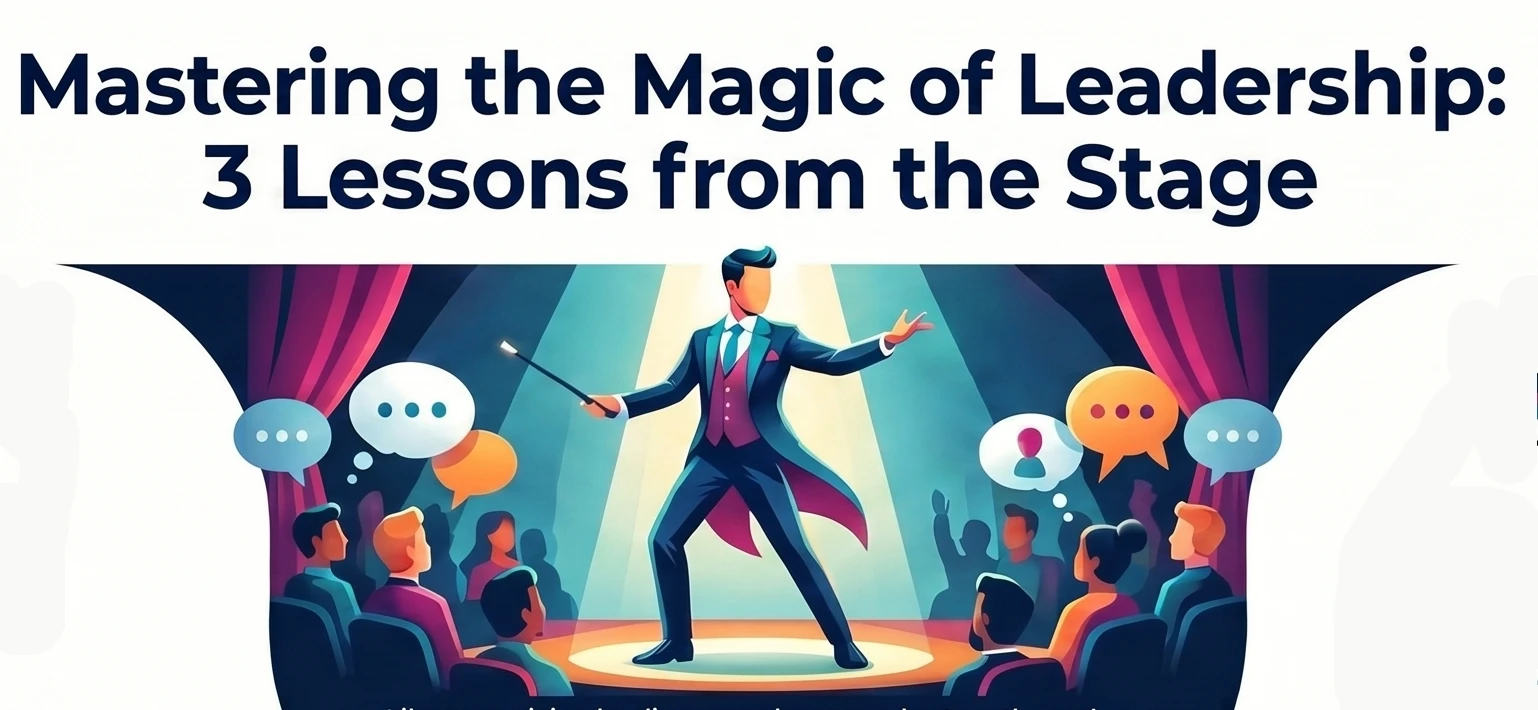
    Professional Magicians know how to engage an audience to make a trick magic. They know exactly what they’re going to say and how they’re going to say it.  Here are 4 things you can learn from a stand up entertainer to improve your presentations.

    1.  Script the presentation

    I know many people who say, “I am at my best when I a free to ad lib.”  I have only one thing to say to that B— S—-!. You are not better. You are worse. And in addition you are simply lazy.

    A professional knows exactly what he is going to do, how and when. Robin Williams is perhaps the best improv comedian in the world. But watch him walk through a bit with a TV crew and you will quickly understand his improv performance is rehearsed and scripted. He looks like he is adlibbing only because he knows his material so well.

    Not having a script is amateurish. The results are unpredictable and not repeatable.  Write down what you’re going to say, review it with a colleague or your manager to help you are saying what needs to be said.

    2.  Cut the presentation ruthlessly

    I have a friend in Las Vegas who had a bit he had been doing for years. It went over well and the audiences loved it. It was about a 10 minute bit. He then was asked to perform it in a new show. But he needed to cut it down to 6 minutes. He did. Next, he was asked to do it for television but he needed to cut it down to 4 minutes. He did. And today that bit is better because he was forced to remove all the fluff that did not add to the bit.

    As you review your presentation, cut out anything that is not needed.  Superfluous information will serve to only confuse your client and detracts from your message. Say what needs to be said and no more.

    3.  Practice, Practice, Practice

    Rehearse your presentation.  Rehearse with a colleague, your manager, a trainer, your spouse, or anyone you can.  If you can, recorded or videotape your rehearsals or practice sessions and review the tape.  As you review them you will be surprised at all the meaning gestures and body language.  You will be surprised at all the meaningless comments and information you’re giving your client.  Remove anything that does not add value.

    Go back to number two and cut the presentation ruthlessly.

    Watching yourself on video, or listening to yourself on tape can be rather unsettling.  But it is absolutely critical if you are to be the best you can be.

    4.  Script your improvisations

    If you watch a standup comedian or magician you’ll notice that they engage with the audience and any volunteer they have on stage.  They don’t go through their script robotically.  They treat their volunteer and their audience as people.  They can do so only once they understand their script. Knowing the script allows then to take a detour from it and they know how to get back to.

    But here’s the dirty little secret, every audience thinks they are unique. All the unexpected things that audience members do, are not all that clever. They are very predictable. They are not unique.  So as a result, comics and magicians have standard lines and bits of Improv they can pull out of a highly rehearsed bag.  You need to do the same.  The objections your clients have, the questions they ask, their reactions to your questions and statements, are not unique.  Have well-rehearsed and scripted responses to all of them.

  • Leadership Secrets of a Magician Part 2

    In the last post I mentioned 3 leadership secrets of a magician. A magician is unique among performers. They often use volunteers. These volunteers are unknown to the magician and the magician must get the volunteer to perform feats the way the magician needs to have them done. This takes a tremendous amount of leadership ability. So here is the second installment of leadership secrets of a magician.

    4. Avoid a one-size-fits-all approach. Every show is different. It does not matter how many times it has been performed. It is performed for a specific audience not audiences in general.

    Everyone makes decisions in different ways. Everyone thinks and evaluates things based on their own criteria. Some are turned on by the coolness factor; others want to see the research and facts. Some are more interested in the practicality of your solution. Others are more concerned with how others may react. A successful leader adjusts to the needs and expectations of the audience.

    5. Don’t preach. Coach. I love magic! I love the idea of wonder and innovation it brings. I am passionate about my performance and I want to explore different worlds, even if they are worlds of my own making. But there are people who do not like magic, my son for one. I don’t understanding but the truth is he does not.

    Leaders know it is fine to be passionate about a topic, but being dogmatic and closed-minded prevents others from being interested in your point of views.

    6. Be yourself. Though it is good to tailor your style to that of your audience, do not lose your individuality. The single best advice given to all magicians is. “be yourself.” Even when playing a character, the magician must find something in himself that is in common with the character. When the magician is himself the audience recognizes it and is willing to believe the magician. Even when in other circumstances they would not accept what just happened.

    Genuineness is required of a leader. People need to trust their leaders. And if the leader cannot be honest with how he is, if he pretends to be something he is not then he has lost all credibility.

    However you apply these skills, it is they be natural to you. If they are not natural, people will see through it and trust you even less. Authenticity is key.

    Business professional are often required to perform magic for a client so take a few tips from a professional magician.